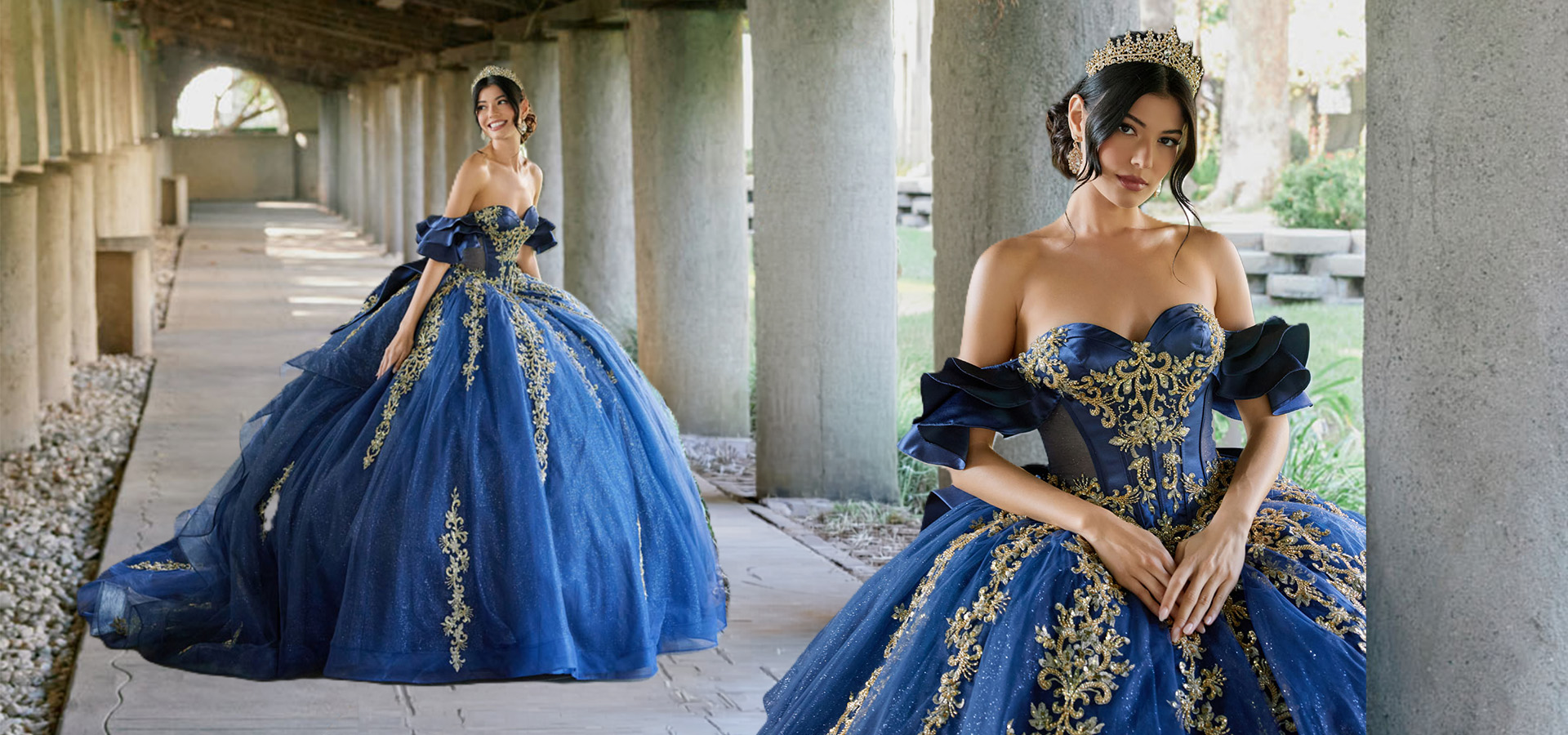
A quinceañera dress is not a shopping decision, it is a schedule. Families who start early find the gown they actually wanted and pay for it comfortably. Families who start late choose from whatever happens to be in stock and pay for rush alterations. The difference between those two experiences is almost entirely the calendar, so here is the calendar, written for families planning a celebration in Scranton and the surrounding counties.
The Short Answer
- Start planning the celebration: about 12 months out.
- Order the gown: 6 to 9 months out.
- Begin alterations: 2 to 3 months out.
- Final fitting: 2 to 3 weeks before the day.
If you only remember one number, remember six to nine months for the gown. That is not a shop trying to rush you. Many quinceañera gowns are made to order rather than pulled off a rack, and the production time alone accounts for much of it.
Why It Takes So Long
Three clocks run one after the other, and they do not overlap.
The gown has to be made. A designer gown in a specific color and size is frequently produced after you order it. That is why you can stand in a shop, see the exact dress you want, and still be told it will be months.
Then it has to be altered. Six to eight weeks is normal for a quinceañera gown, and it is spread across two or three fittings rather than done in one go. This is not slowness. A gown with a structured bodice, a corset back and multiple skirt layers has to be adjusted, checked on the body, adjusted again. Each pass depends on what the previous one revealed.
Then it has to still fit. A fifteen year old's measurements at the time of ordering are not guaranteed to be her measurements at the celebration, which brings us to the question every mother asks.
The Growth Spurt Question
"What if she grows?" is the most common question we hear, and it deserves a real answer rather than reassurance.
She might, and it is manageable, provided two things are true. First, the gown was chosen with adjustment range built in: ordered a size up rather than exactly to measurement, and ideally with a corset or lace-up back, which is the most adjustable closure there is. Second, the alterations are being done by the shop that sold the dress, in the same building.
That second point is where families get caught. If a gown has to be shipped somewhere to be altered, every change costs weeks of transit, and a growth spurt found at a fitting in month eight becomes a genuine emergency. If alterations are done in house, the same discovery is a conversation and another visit.
So when you are comparing shops, the question to ask is not "do you do alterations", it is "where are they done". Those get very different answers.
Month by Month
| When | Dress | Money |
|---|---|---|
| 12 months out | Start looking, in person. Learn what silhouettes she actually likes before anyone commits. Book the venue first, because the date drives everything else. | Set a total budget and split it: gown, alterations, accessories, court. |
| 9 to 6 months out | Choose and order the gown. Decide the color, confirm the size strategy, and ask in writing when it is expected to arrive. | Open layaway if the shop offers it. Deposit now, balance over the coming months. |
| 6 to 4 months out | Order the court. Damas dresses take their own lead time and fourteen families do not move at one speed. | Continue layaway payments. This is the quiet stretch, and it is the one that keeps the final months calm. |
| 3 months out | Gown should be in hand. Buy the shoes now, because the hem cannot be set without them. | Layaway should be close to paid off, before alterations are added. |
| 2 to 3 months out | First fitting. Bring the shoes, the petticoat and the undergarments she will wear on the day. Nothing measured without them is reliable. | Alterations quoted. Typically 50 to 200 dollars depending on the work. |
| 1 to 2 months out | Second fitting. Bodice and hem refined. Crown, gloves and jewelry chosen against the finished gown rather than from memory. | Accessories, usually 150 to 300 dollars all in. |
| 2 to 3 weeks out | Final fitting. She should walk, sit and dance in it here, not discover a problem on the day. | Balance settled. |
| The last week | Gown home and hanging, covered, somewhere dry and out of direct light. Do not press it yourself the night before. | Nothing left to pay. |
What It Costs
Gowns commonly run from around 500 to 1,500 dollars, and simpler styles are available under 500. Alterations typically add 50 to 200 dollars. Accessories, meaning the crown, petticoat, gloves and shoes, usually come to another 150 to 300 dollars.
The number that surprises people is the accessories line, because it arrives last and nobody budgets for it at the start. Split your budget four ways at the twelve month mark and it will not catch you.
On paying for it: ask about layaway before you rule any gown out. Free layaway maps onto this timeline almost perfectly. You order at the nine month mark with a deposit, pay across the quiet middle months when nothing else is happening, and arrive at the first fitting with the gown already paid for. It is the single most useful thing an independent shop can offer a quinceañera family, and it is the reason a gown that looks out of reach in month one is comfortable by month six.
If You Are Short on Time
It happens, and it is not hopeless. Inside three months, change the strategy:
- Shop from stock only. Ask what is physically in the building in her size. Forget the catalog.
- Prioritize the bodice fit. A hem is quick. A bodice is not. Choose the gown whose top half is closest to right.
- Favour a corset back. It buys adjustment range that a zip does not.
- Buy the shoes first. Then the hem can be cut at the first fitting rather than the second.
- Say the date out loud. A shop that knows you have six weeks will pull differently than one that assumes six months.
Looking After It Before the Day
Keep the gown covered, hanging, in a dry room away from direct sunlight. Not in a plastic dry cleaning bag long term, and not folded in a box. If it needs pressing, let the shop do it, because satin and tulle both mark permanently under a domestic iron and there is no undoing it the night before.
How We Handle It
We have been fitting quinceañera gowns in Scranton since 1994, which means we have run this timeline several hundred times, including the versions that started late. Our quinceañera gowns come in sizes 000 to 28, alterations are done in house rather than at a warehouse, and layaway is free. Damas dresses for the court come from the same floor, which is how fourteen girls in fourteen sizes get coordinated in one afternoon.
If you are at the twelve month stage and just want to know what is possible, call (570) 354-6149 and ask. If you are further along, come in and bring the shoes. And if you are planning the court next, our guide to damas and chambelanes covers how many, who pays and how to coordinate them.