If this is your first homecoming, or your child's first, the whole thing can feel like everyone else got a set of instructions you missed. They did not. It is just a tradition that nobody explains because everybody assumes you already know. So here is the plain version: what homecoming is, what the week involves, what it costs, and what actually happens on the night.
What Is Homecoming?
Homecoming began as a school welcoming its alumni back, which is where the name comes from. Former students return, there is a home football game, and the school makes an occasion of it.
What it has become, for the students actually living it, is a week. Spirit days at school, often a parade, the football game itself, the crowning of a homecoming court, and then a semi-formal dance, usually on the Saturday after the game. The dance is the part most people mean when they say homecoming, but it is genuinely the last item in a longer sequence.
When Is Homecoming?
Across Lackawanna and Luzerne County, homecoming generally lands between late September and mid October. Northern districts tend to schedule earlier in that window, for the straightforward reason that an outdoor parade and a pep rally in Scranton get unpleasant once the fall properly arrives.
That is the pattern, not a promise. Every district sets its own date and some move theirs year to year around football scheduling. Check your own school calendar, or ask the student activities office. We are not going to print a date here and have someone plan around it.
Who Goes?
At most schools, all four years. That is one of the real differences from prom, which is often restricted to juniors and seniors. So a freshman at homecoming is completely normal and nobody thinks anything of it.
Students frequently bring a date from another school, which usually needs a guest form signed in advance. If that applies to you, sort it early rather than the week of, because there is almost always a deadline.
The Week Before: Spirit Week
The days before homecoming are usually themed dress-up days: pyjama day, decades day, color wars by year group, jersey day. Every school has its own list and it is published in advance.
It is genuinely worth joining in, and not for sentimental reasons. Spirit week is where a lot of the week's photographs come from, and it is a low-stakes way to be part of it if the dance itself feels intimidating.
The Parade and the Game
Many schools hold a homecoming parade, with floats built by year groups or clubs, the marching band, cheerleaders, sports teams and the court. If you are on a float, expect to be outside for a while in October, so dress for that rather than for photographs.
The football game is the center of the week. It is a home game, alumni come back, and there is usually a halftime presentation of the court. Attending is optional but it is where most of the atmosphere lives.
The Homecoming Court
The court is a group of students, usually nominated and then voted on by their year, with a king and queen crowned either at halftime of the game or at the dance. Some schools crown from the senior year only, some include all years.
Being on the court means some extra obligations: the parade, the halftime presentation, sometimes a dance at the start of the evening. If you are nominated, ask what is actually expected, because it varies enormously between schools and nobody tells you unprompted.
Two honest notes. The court is a popularity vote, and it is fine to care about it and equally fine not to. And if you are on it, the halftime walk happens on a football field in October, which is worth factoring into your shoes.
Getting Asked, and Asking
Elaborate proposals are a thing, and so is a text message. Both are normal. The elaborate ones get posted and the text messages do not, which distorts how common each one actually is.
If you want to ask someone, ask early enough that they can still sort a dress or a suit, which realistically means two or three weeks out. If you would rather not ask anybody, see below, because going with friends is now the default at plenty of schools.
What It Costs
Roughly, and it adds up in a way that surprises people the first time:
- Tickets: usually modest, often 10 to 30 dollars. Nearly always cheaper in advance than at the door.
- The dress: commonly 150 to 350 dollars in this area, and the largest single line.
- Alterations: 30 to 100 dollars, depending on whether it is a hem or a full take-in.
- Shoes and jewelry: less if you already own something that works, and you very often do.
- Hair, and makeup if you are having it done: optional and frequently done at home or by a friend.
- Dinner: anywhere from nothing, if it is at somebody's house, to a proper restaurant bill.
- Transport: usually a parent. Sometimes a group hires something.
If the total is uncomfortable, the two levers that actually help are layaway on the dress, which spreads the biggest cost over weeks instead of one payday, and doing dinner at somebody's house, which most groups end up doing anyway because it is better.
Pre-Dance Photos
This is the part parents care most about and students underestimate. The group meets somewhere before dinner, usually a garden or a park, and the parents photograph everybody for longer than anybody expects.
One practical tip worth having: aim for the hour before sunset. The light is warm and low, it flatters everybody, and it is the single easiest thing you can do to improve the pictures. Also decide the location in advance, because forty minutes of a group deciding where to stand is forty minutes of the evening gone.
Dinner
Two usual versions. A restaurant, which needs a reservation booked well in advance because every group in the district has the same idea on the same night. Or somebody's house, which is cheaper, more relaxed and honestly where the better stories come from.
Either way, eat. Skipping dinner and then dancing for three hours is how the evening goes wrong.
Getting There
Most people get a lift from a parent, and that is completely normal. Some groups split the cost of something larger, which is fun and needs booking weeks ahead.
Whatever the plan, agree the return journey before you leave. Who is collecting whom, from where, and at what time. Sorting it at 10pm in a car park with a dead phone is the thing to avoid.
What Happens at the Dance
Honestly? It starts slowly. There is usually a photo line, and for the first half hour everybody stands around the edges of a decorated gym or hall looking at each other. This is normal and it is not a sign the night is a failure.
Then the music does its job and it fills up. There is a DJ, there are the songs everybody knows, there is often a slow song that causes a small crisis, and if the court was not crowned at the game it happens here. Teachers and parent volunteers chaperone. Phones come out constantly.
Things worth knowing in advance: there is a dress code and it is enforced at some schools, so if you are unsure about a neckline or a length, ask before the night rather than at the door. Most schools do not allow re-entry once you leave. And it is loud, so if you need a break, that is what the corridor outside is for.
How Long It Lasts
Usually two to three hours. Something like 7 to 10 in the evening is typical. That is much shorter than people expect, and it is another real difference from prom.
After the Dance
Some schools run an official after-homecoming event, which is supervised and goes later. Otherwise groups usually end up at somebody's house.
The useful thing here is not a rule, it is a conversation. Agree with your parents, before the night, where you are going afterwards, who is driving, and what time you are home. Everybody has a better evening when that is settled in advance rather than negotiated by text at 11pm.
Going Without a Date
Completely normal, and at a lot of schools it is now the more common choice. Groups of friends go together, dance together and take the photographs together, and nobody at the dance is auditing who arrived with whom.
If you are anxious about it, go with one person you actually like being around. That is enough. The dance is two hours and it is mostly standing in a group.
For Parents
Five things that are useful to know:
- The date moves. Confirm it with the school rather than assuming last year's weekend.
- Photos happen before dinner, not before the dance, and they take longer than you plan for.
- There is a dress code, and it is worth reading it before the dress is bought rather than after.
- Dress shopping three weeks out is tight but workable if you buy somewhere that has stock on the floor and alters in house. Two weeks out, ask about the alterations schedule before you buy.
- Agree the after-plan early. It is the one conversation that prevents the awkward one.
When You Get to the Dress
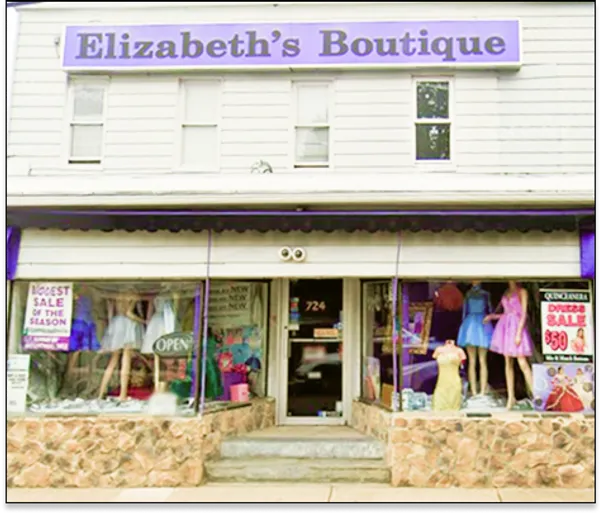
That part is what we do. Our homecoming and semi-formal dresses are short styles in sizes 000 to 28, most of them on the floor to try on the same day, with alterations done in house and free layaway. We are at 724 Cedar Avenue in Scranton with free parking in our own lot behind the building, open Monday, Tuesday and Thursday 12:30 to 6, and Saturday 11 to 3.
Next, depending on where you are: what to wear and what the dress code actually means, putting the whole look together, or what is trending for 2026. Or just call (570) 354-6149 and ask us anything.