Prom is the biggest night on a high school calendar and almost nobody explains how it actually works until you are already in it. If this is your first one, or your child's, here is the whole shape of the evening: what happens, in what order, what it costs, and the one Pennsylvania tradition that should change how you choose a dress.
What Is Prom?
A formal dance, usually held toward the end of the school year, and the most formal event most students will have attended in their lives so far. Floor-length gowns, suits and tuxedos, a venue that is often not the school, and an evening built around it rather than an hour tacked onto a football game.
That is the real difference from homecoming. Homecoming is semi-formal, short dresses, two or three hours, in the autumn. Prom is formal, long dresses, an entire evening with a run of events attached, in the spring.
Who Goes?
Typically juniors and seniors, and many schools hold a separate junior and senior prom. Underclassmen usually attend only as a guest of an upperclassman, and that generally needs a guest form signed in advance.
If you are bringing a date from another school, sort the paperwork early. There is nearly always a deadline and it nearly always catches somebody out.
When Is Prom?
In this area, late April or May, usually a Friday or Saturday evening. Districts set their own dates and they move year to year.
The date matters more than people realize, because it drives the dress timeline. Working back from a late April prom, you want to be looking in January and buying in February.
Promposals
Elaborate invitations are a genuine tradition now, with signs, stunts and friends recruited to film it. They are also entirely optional, and plenty of people just ask.
The selection bias is worth naming: the elaborate ones get posted and the ordinary ones do not, which makes the elaborate ones look far more universal than they are.
One piece of practical advice regardless of style: ask early enough that the other person can still sort a dress or a suit. Three or four weeks out is kind. The week before is not.
What It Costs
Honestly, this is the part that surprises families, because it is not one purchase, it is nine:
- Tickets. Often 40 to 100 dollars, and sometimes priced per couple. Usually cheaper in advance.
- The dress. The largest single item, and the one worth spending real attention on.
- Alterations. Almost always needed on a floor-length gown, because floor length depends entirely on your height and your shoes.
- Shoes. Which the hem is then cut to.
- Hair, and makeup if it is being done professionally. Book early, because every salon in the district is booked on the same Saturday.
- Flowers. A corsage or a boutonnière, ordered in advance.
- Dinner. Restaurant or somebody's house.
- Transport. Often shared across a group.
- After-prom. Sometimes a separate ticket.
Two things genuinely reduce the pain, and neither involves buying a worse dress. Layaway spreads the biggest item across January to April instead of landing it in one week, which is the actual problem for most families. And doing dinner at somebody's house saves a lot and is usually the better evening anyway.
The Dress Timeline
- January: start looking. Try things on with no intention of buying, purely to learn what shape suits you. The single most useful hour in the process.
- February: buy. Comfortable if the dress has to be ordered, and the fullest racks of the year if you are buying from stock.
- March: shoes first, then the first fitting.
- Two to three weeks before: final fitting. Walk, sit and dance in it in the fitting room.
If you are reading this in April, the plan changes rather than collapses: shop from what is physically in stock, pick the dress whose bodice fits best because a hem is quick and a bodice is not, favour a corset back for the adjustment range, and say your date out loud so the shop pulls differently. Our full prom timeline piece goes into the duplicate-dress question too.
Getting Ready
This takes longer than anybody plans for, every year. Hair appointments are usually booked weeks ahead and often run late because every other appointment that day also ran late.
Two practical things. Do a full test run of hair and makeup a few days before, which tells you both whether it works and how long it actually takes. And build in a buffer, because the grand march and the photographs both have fixed times and neither waits.
Pre-Prom Photos
The group meets somewhere before dinner, usually a garden, a park or somebody's front steps, and the parents photograph everybody for considerably longer than the students expect.
The one tip that improves prom photographs more than anything else: go out in the hour before sunset. Warm, low, soft light, no equipment needed, and every gown photographs better in it. Decide the location in advance too, because deciding on the night eats half an hour.
The Grand March
This is the Pennsylvania tradition that visitors find surprising and that you should know about before you shop.
Many schools in this area hold a grand march before the dance: couples and groups are announced by name and walk the length of the gym or auditorium while an audience of parents, grandparents and families watches and photographs from the bleachers. It is effectively a runway, and at some schools it is the part the families come for more than the dance.
Practically, it means three things:
- You will be walking, slowly, in front of hundreds of people. Choose shoes accordingly. This is not the moment to discover a heel is unmanageable.
- The hem has to be right. A gown that drags is a trip hazard on a polished gym floor with everybody watching. This is the strongest argument there is for bringing your shoes to the fitting.
- It is the most photographed moment of the night, usually shot from a distance and slightly above. Silhouette and color matter more than fine detail from that angle.
Check with your school whether they hold one, when it starts, and whether guests need tickets, because families often do.
Transport
Groups often share something larger and split the cost, which needs booking well in advance. Plenty of people are driven by a parent, which is entirely normal and frequently more comfortable.
Whatever the plan, settle the return journey before you leave: who is collecting whom, from where, and when. If there is an after-prom event, the plan has to cover the leg home from that too, not just from the dance.
Dinner
Restaurant or house. If it is a restaurant, book weeks ahead, because every group in the district is trying for the same tables on the same evening, and arrive with time to spare because the grand march will not wait.
And eat properly. A long evening on an empty stomach, in a fitted gown, in a hot room, is how prom night goes wrong for reasons that have nothing to do with the dress.
The Dance Itself
Usually three to four hours, often something like 7 to 11, and typically at a venue rather than the school: a hotel ballroom, a banquet hall, a country club.
The shape of it is reliable. A photo line early on, which is where the professional photographs are taken. A slow start while everybody looks at each other. Dinner or a buffet at many proms. Then the music does its work and the floor fills. The court is usually crowned partway through. Teachers and parents chaperone.
Things worth knowing: there is a dress code and some schools enforce it at the door, most do not allow re-entry once you leave, and it gets hot, which is what the blotting papers and the spare hair pins in your clutch are for.
Prom Court
Nominated and voted on by the year group, with a king and queen crowned at the dance. Some schools announce the court in advance, others keep it to the night.
If you are on it, ask what is expected, because it varies: sometimes a presentation, sometimes a first dance, sometimes just standing at the front while your name is read. It is a popularity vote, and it is entirely fine to care about it or not to.
After-Prom
Many schools in this area run an official after-prom, organized by parent volunteers and supervised, running late into the night with food, games and prizes. They exist specifically so that there is somewhere to go, and they are usually better than students expect.
Where there is no school event, groups make their own plans, and that is where the conversation with your parents matters. Agree in advance where you are going, who is driving, and when you are home. Everybody has a better night when that is settled on a Tuesday rather than negotiated by text at midnight.
One thing worth saying plainly to any student reading this: nobody is obliged to do anything on prom night. It is a dance, followed by pancakes at somebody's house. The version of the evening you actually enjoy is the correct version.
Going Without a Date
Normal, common, and at many schools now the majority choice. Groups go together, walk the grand march together, sit together and take the photographs together.
If the grand march is the part that worries you, walk it with a friend. Schools are entirely used to it and there is nothing unusual about being announced as a pair of friends or a group.
For Parents
- Ask about the grand march early. Date, time, whether you need a ticket. Families often do, and they sell out.
- The dress needs to be bought in February, not April. Alterations on a floor-length gown are not optional and the seamstresses in this area are fully booked by mid-April.
- Photographs are before dinner, and they run long. Plan the evening backwards from the grand march time.
- Book hair and the restaurant weeks ahead. Every family in the district wants the same slots.
- Ask about layaway when you shop. It turns the single biggest cost into four smaller ones, and it is usually free.
- Have the after-prom conversation early, calmly, when nobody is stressed. It is the one that makes the night easier for both of you.
When You Get to the Dress
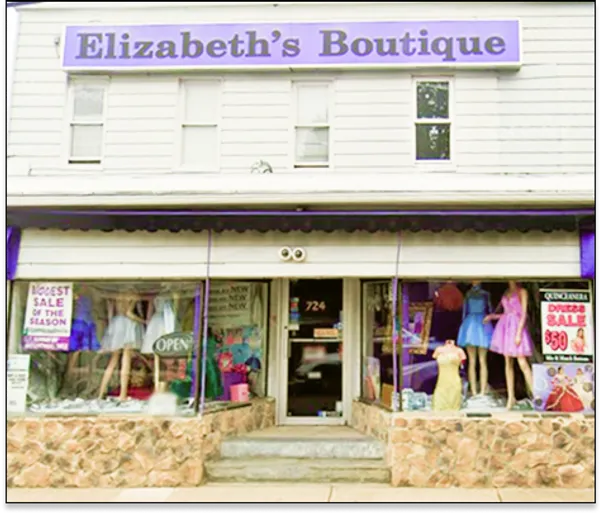
Our prom dresses come in sizes 000 to 28, most styles on the floor to try on the same day, from Juliet and Poly USA. Alterations are done in house, which is what makes a grand-march hem exactly right, and layaway is free with no interest and no fee. We have been doing prom on Cedar Avenue since 1994.
We are at 724 Cedar Avenue in Scranton with free parking in our own lot behind the building. Walk in Monday, Tuesday or Thursday 12:30 to 6, or Saturday 11 to 3, and bring your shoes. Call (570) 354-6149 to ask what is on the rack in your size.
Read next: when to shop, and the duplicate dress problem, sizes 000 to 28, and what alterations can and cannot change.